
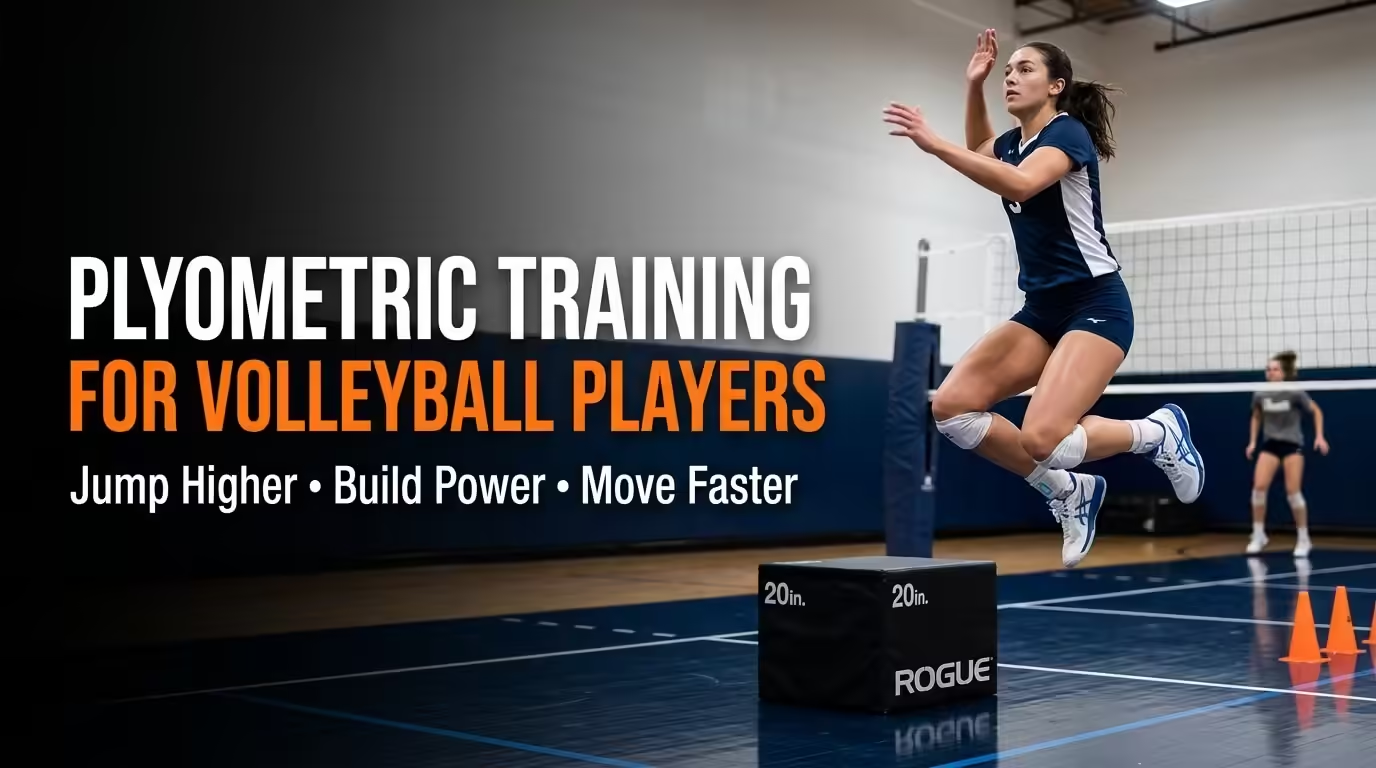
Discover the 5 best drills for plyometric training for volleyball players. Elevate your vertical jump, build explosive court speed, and protect your knees.
5 Best Drills: Plyometric Training for Volleyball Players
Volleyball is an exciting sport defined by explosive movement. Whether you are soaring above the net for a match-winning spike, penetrating the plane on a block, or diving across the hardwood for an incredible dig, split-second athletic power is your greatest asset.
If you want to add impressive inches to your vertical jump, improve your court agility, and protect your body against injury, incorporating plyometric training for volleyball players into your routine is a proven path to success.
In this comprehensive guide, we break down what jump training is, why plyometric training for volleyball players is essential, the five best drills to perform, and how to program them safely.
What is Plyometric Training in Volleyball?
Plyometric training—often called “jump training”—consists of dynamic exercises where muscles exert maximum force in short intervals of time to build incredible power.
At its core, plyometric training for volleyball players relies on the Stretch-Shortening Cycle (SSC):
- Eccentric Phase: The muscle rapidly stretches (e.g., dipping into a squat before jumping).
- Amortization Phase: The quick transition period between stretching and contracting.
- Concentric Phase: The muscle shortens explosively, releasing stored elastic energy to launch you into the air.
In volleyball, training this cycle allows you to generate higher forces faster, directly improving your approach jump, lateral footwork, and reaction times.
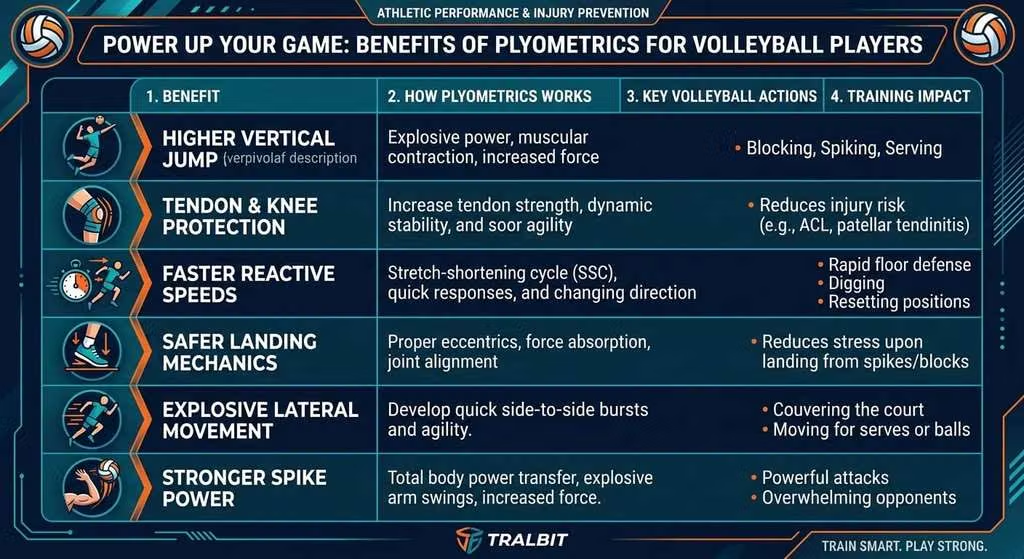
Powerful Benefits of Plyometric Training for Volleyball Players
1. Increased Vertical Jump Height
Volleyball is an uplifting vertical sport. By training your nervous system to contract muscle fibers as fast as possible, plyometric training for volleyball players converts ground force into impressive air time—helping hitters get over blocks and blockers shut down attacks.
2. Safer Landing Mechanics & Injury Prevention
Patellar tendinopathy (“jumper’s knee”) and ACL tears are common volleyball injuries caused by high-impact jumps and improper landing mechanics. Proper plyometric training for volleyball players places a heavy emphasis on eccentric control—teaching your joints, tendons, and muscles how to absorb ground impact forces safely upon landing.
3. Faster Lateral Agility
Middle blockers and defensive specialists must react in milliseconds. Adding plyometric training for volleyball players strengthens the hips and ankles for sharp cuts and quick directional shifts without losing momentum.
🏐 Related Reading: Physical agility is only half the battle on defense. Learn how on-court positioning and calls work together in our guide: Why Communication is Important in Volleyball (8 Game-Changing Reasons).
5 Best Drills: Plyometric Training for Volleyball Players
Here are the five most effective, sport-specific exercises that demonstrate how plyometric training for volleyball players elevates overall athleticism on the court:
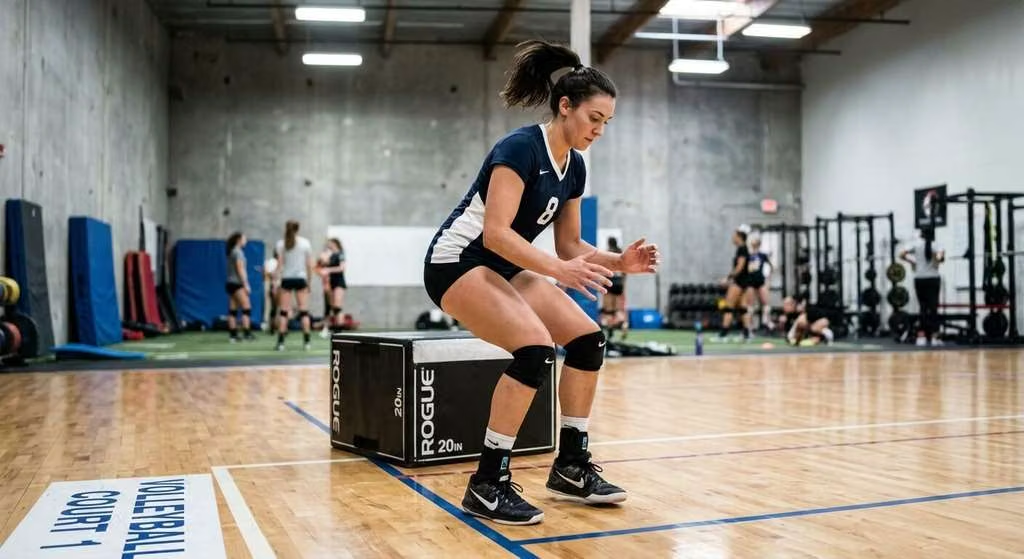
1. Depth Drops (Landing Control & Safety)
- Target: Tendon resilience, shock absorption, landing mechanics.
- How to do it: Stand on a low plyo box (12–18 inches). Step off the box (do not jump off) and land on both feet simultaneously. Absorb the landing quietly by bending your hips and knees into an athletic position. Hold for 1–2 seconds.
2. Depth Jumps (Reactive Vertical Power)
- Target: Minimum ground contact time, maximum reactive vertical explosion.
- How to do it: Step off a 12–18-inch box. As soon as your feet hit the floor, explode upward as high as possible with an aggressive arm swing—mimicking a volleyball block. Spend as little time on the ground as possible.
3. Lateral Hurdle Hops (Blocking & Defense Agility)
- Target: Lateral explosion for blocking and defensive positioning.
- How to do it: Set up 3 to 4 small hurdles or cones. Stand parallel to the line and bound laterally over each hurdle cleanly and rhythmically. Focus on soft landings and fast rebounds off the court.
4. Approach Box Jumps (Spiking Approach Conversion)
- Target: Converting horizontal approach speed into vertical jump height.
- How to do it: Perform your standard 3-step or 4-step spiking approach footwork. Plant your footwork violently on the penultimate step and explode up onto a sturdy plyo box.
5. Single-Leg Skater Jumps (Unilateral Stability)
- Target: Unilateral power, hip stability, single-leg deceleration.
- How to do it: Start standing on your right leg. Push off explosively to bound sideways to your left leg, landing softly in a single-leg squat before bounding back.
Sample Routine: Plyometric Training for Volleyball Players
Plyometrics demand maximum neural output. Keep rep counts low and rest intervals high so every effort is executed at maximum intensity for the best results.
Perform this sample routine for plyometric training for volleyball players 2 times per week on non-consecutive days:
| Drill | Sets | Reps / Contacts | Rest Between Sets | Focus |
| 1. Depth Drops | 3 | 5 reps | 60 sec | Soft landing, chest up |
| 2. Depth Jumps | 3 | 5 reps | 90 sec | Quick ground reaction |
| 3. Lateral Hurdle Hops | 3 | 6 hops each direction | 90 sec | Fast, elastic rebounds |
| 4. Approach Box Jumps | 4 | 4 reps | 90–120 sec | Explosive footwork drive |
| 5. Single-Leg Skater Jumps | 3 | 6 reps per leg | 60 sec | Lateral control & stability |
Safety Rules for Plyometric Training for Volleyball Players
When programming plyometric training for volleyball players, quality always beats quantity. Follow these guidelines to avoid overtraining and stay healthy:
- Build a Strength Base First: If you lack basic lower-body strength (e.g., squatting your body weight), start with lighter jump variations before jumping off high boxes.
- Prioritize Rest: Take 60 to 120 seconds of rest between sets. Jump training is not cardiovascular conditioning; every jump should feel like 100% effort.
- Choose the Right Surface: Train on shock-absorbing surfaces like wooden court floors, turf, or rubber matting—avoid concrete.
- Cap Your Contact Volume: Aim for 60–100 total ground contacts per session. Stop immediately if your jump height drops noticeably due to fatigue.
Final Thoughts
Implementing plyometric training for volleyball players into your workout regimen is the single most effective way to unlock explosive athletic ability on the court. By focusing on speed, proper landing mechanics, and positive effort, you will jump higher, move faster, and achieve lasting athletic success.
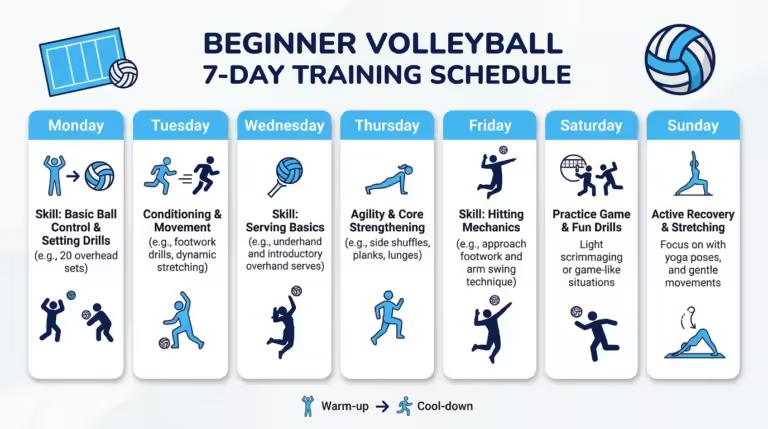
Next Step for Players & Coaches: Once you’ve mastered explosive physical performance, make sure your team synergy is just as sharp. Discover Boost Your Skills with This Winning Volleyball Weekly Training Program for Beginners: The Ultimate 7-Day Guide to coordinate your plays effectively.
Remember: Great volleyball players hit hard—but extraordinary volleyball teams communicate clearly.
Frequently Asked Questions (FAQ)
How often should volleyball players do plyometrics?
Most coaches recommend plyometric training for volleyball players 2 to 3 times per week during the off-season and 1 to 2 times during the competitive season, allowing at least 48 hours of recovery between intense jump sessions.
Can beginners do plyometric exercises?
Yes! Beginners starting plyometric training for volleyball players should focus on low-impact drills like line hops, squat jumps, and depth drops to build foundational landing control before progressing to high-intensity exercises like depth jumps.
Does plyometric training replace strength training?
No. Plyometrics builds speed and reactivity, while weight training (squats, lunges, deadlifts) builds force production. Combining weightlifting with plyometric training for volleyball players yields the best vertical jump results.


3 Comments