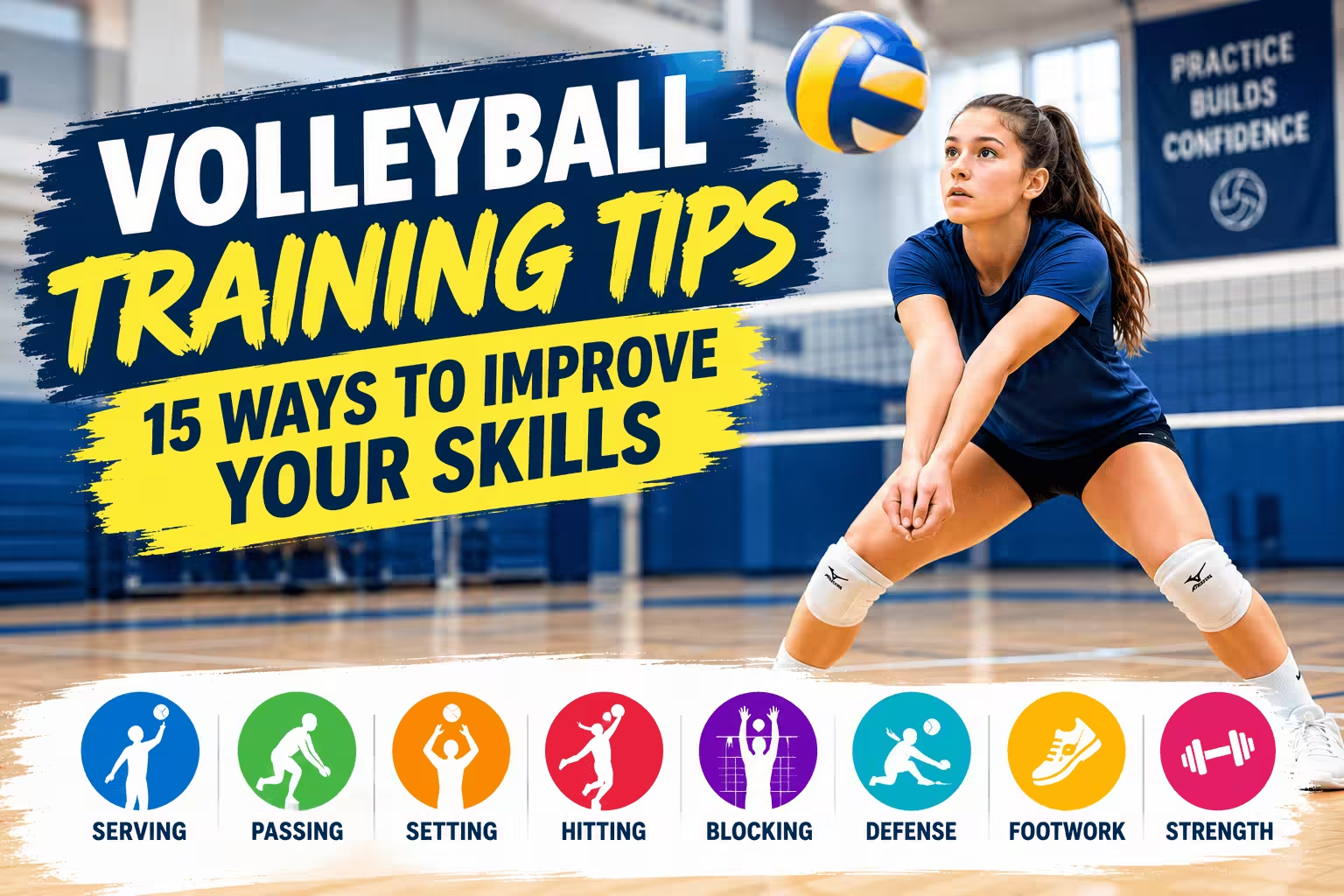
Discover 15 practical volleyball training tips to improve serving, passing, setting, spiking, footwork, and fitness. Build confidence and play better.
Volleyball Training Tips: 15 Ways to Improve Your Skills
Volleyball training tips can help you build better technique, improve ball control, move faster on the court, and become a more confident player. Whether you are a beginner learning the fundamentals, a high school athlete preparing for tryouts, or a recreational player looking to improve, consistent practice can make a real difference.
You do not need to spend hours in the gym every day to develop your skills. A focused practice routine, proper technique, and a willingness to learn from mistakes can help you make steady progress.
In this guide, you will discover 15 practical volleyball training tips covering serving, passing, setting, hitting, blocking, defense, footwork, strength, and recovery. You will also learn how to structure your practice sessions and avoid common training mistakes.
1. Master the Basic Volleyball Skills First
One of the most important volleyball training tips is to develop a strong foundation before focusing on advanced techniques. Good fundamentals make it easier to learn new skills and perform consistently during matches.
Start by practicing these essential skills:
- Serving: Send the ball over the net accurately and consistently.
- Passing: Use your forearms to control the ball and direct it toward the setter.
- Setting: Position your hands correctly and deliver a controlled ball to a hitter.
- Hitting: Learn your approach, arm swing, timing, and contact point.
- Blocking: Practice footwork, hand positioning, and timing at the net.
- Defense: Improve your ready position, reaction time, and ability to dig attacks.
Choose one or two skills to focus on during each practice session. This makes your training more manageable and helps you identify areas that need improvement.
2. Practice Volleyball Consistently
Regular practice is more effective than occasional sessions with no clear plan. Create a weekly schedule that fits your experience, fitness level, and available practice time.
For example, a beginner might organize training like this:
| Day | Training Focus |
|---|---|
| Monday | Passing and ball control |
| Tuesday | Serving accuracy |
| Wednesday | Setting and footwork |
| Thursday | Strength, mobility, and conditioning |
| Friday | Hitting approach and defensive movement |
| Saturday | Team practice or combined drills |
| Sunday | Rest or light recovery |
You can adjust this schedule around school, work, team practices, and matches. If you already attend several team sessions each week, you may need less additional training.
The goal is to practice with purpose rather than simply repeating movements without feedback. Coaches looking for additional practice ideas can explore the AVCA volleyball coaching drills and practice resources for more ways to organize skill development and team training.
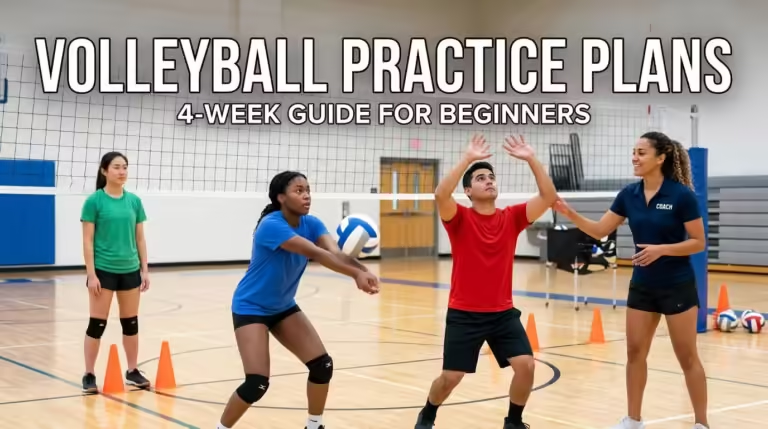
3. Improve Your Volleyball Passing Technique
Passing is a fundamental skill because it helps your team control serves, defend attacks, and organize offensive plays.
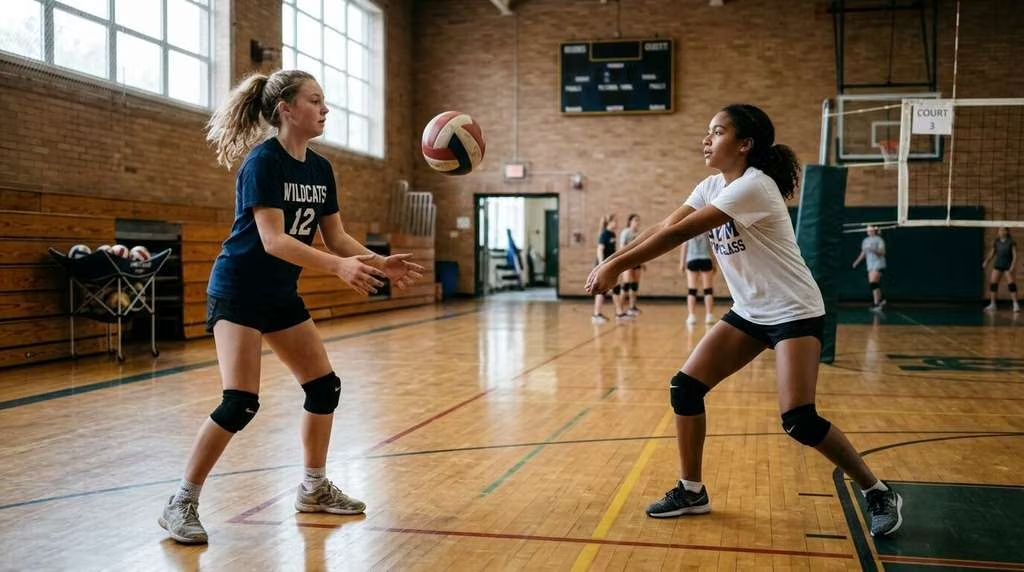
To improve your passing technique:
- Stand with your feet slightly wider than shoulder-width apart.
- Bend your knees and lean forward slightly.
- Keep your arms straight and bring your forearms together.
- Position your platform toward the intended target.
- Move your feet to get behind the ball whenever possible.
- Use your legs and body position to control the pass instead of swinging your arms excessively.
Passing drills to try
Wall passing: Stand a comfortable distance from a wall and practice controlled forearm passes. Aim for consistent height and contact.
Partner passing: Work with a teammate and focus on sending the ball toward a specific target.
Shuffle passing: Have a partner send balls to either side so you can practice moving into position before passing.
Start slowly and focus on accuracy. Increase the difficulty as your control improves.
4. Develop a More Accurate Volleyball Serve
A consistent serve puts pressure on the opposing team and gives your team an opportunity to score. Beginners should prioritize control before trying to serve with maximum power.
Start with the underhand serve if you are learning the basics. Once you can consistently send the ball over the net, work toward an overhand serve.
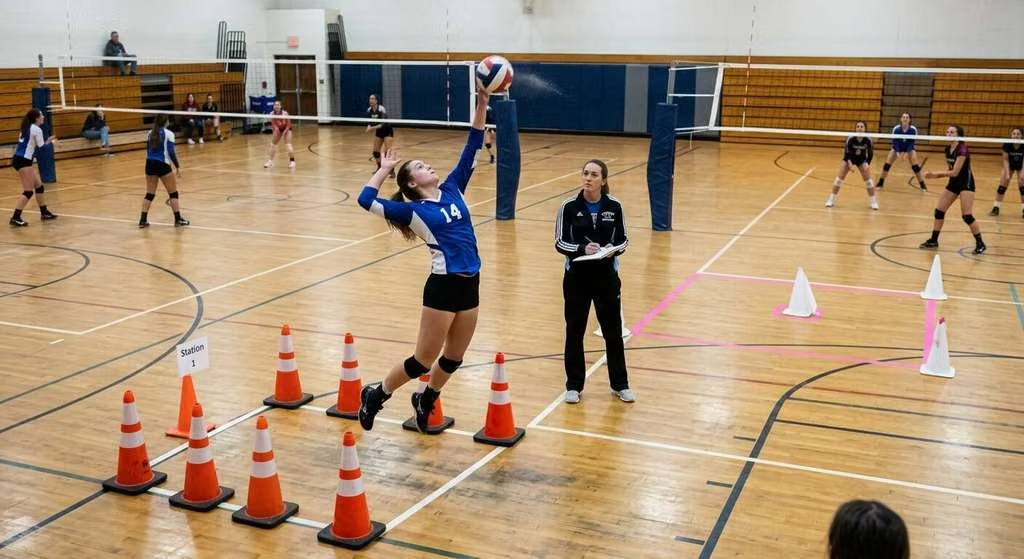
Follow these tips:
- Use a comfortable, balanced stance.
- Hold the ball steadily in front of your body.
- Contact the ball with a controlled movement.
- Keep your eyes on the ball during contact.
- Aim for a specific area of the court.
- Repeat the same serving routine before each attempt.
Try a target-serving drill
Place cones or choose target areas in different parts of the opposite court. Practice serving toward each target and track how many attempts land in your intended area.
For an additional challenge, alternate between short serves and deeper serves. This teaches you to control placement instead of relying only on power.
5. Practice Setting With Better Hand Control
Setting requires coordination, touch, positioning, and good decision-making. The setter helps organize the offense by delivering hittable balls to teammates.
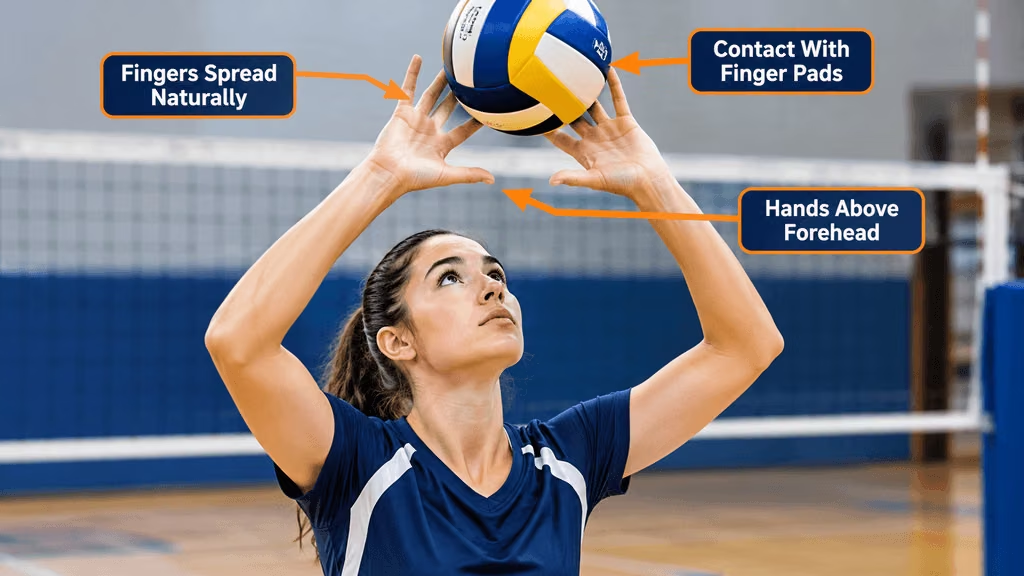
To improve your setting:
- Keep your knees slightly bent.
- Position your hands above your forehead.
- Spread your fingers naturally and form a comfortable hand shape.
- Contact the ball with your fingertips, not your palms.
- Extend your legs and arms in a coordinated movement.
- Finish with your hands directed toward your target.
Avoid holding or catching the ball. Practice a controlled release that follows the rules of volleyball.
Beginner setting drill
Stand a few feet from a wall and repeatedly set the ball upward toward a consistent target. Maintain a comfortable rhythm and move your feet to stay under the ball.
As your technique improves, practice setting with a partner and moving to different locations before contact.
6. Improve Your Hitting and Spiking Technique
Hitting combines footwork, timing, jumping, arm movement, and ball contact. Trying to hit as hard as possible before learning proper technique can make it difficult to develop a consistent approach.
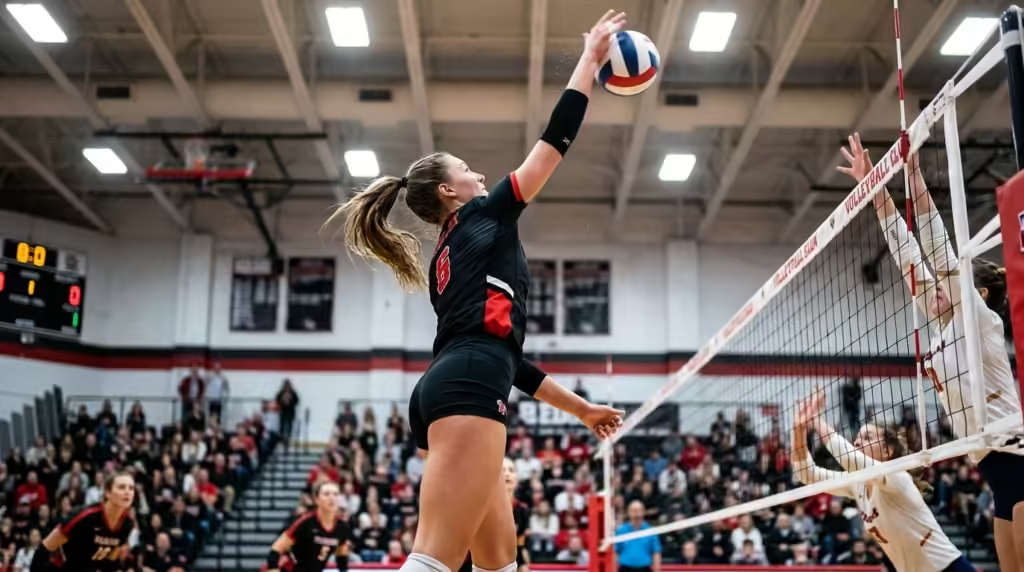
Focus on these fundamentals:
- Learn the approach steps for your hitting hand and preferred technique.
- Coordinate your arm swing with your footwork.
- Jump under control when appropriate.
- Contact the ball high and slightly in front of your hitting shoulder.
- Follow through naturally and land with balanced control.
Hitting drills
Approach footwork drill: Practice your approach without a ball to develop rhythm and coordination.
Standing arm-swing drill: Rehearse your arm movement and contact mechanics without jumping.
Controlled hitting drill: Work with a setter or coach to practice attacking hittable balls toward selected court areas.
Use a coach’s feedback when possible. Correct timing and safe landing mechanics are more important than hitting hard during every repetition.
7. Strengthen Your Volleyball Footwork
Quick footwork helps you reach the ball, position yourself for a pass, transition into an attack, and react to opponents.
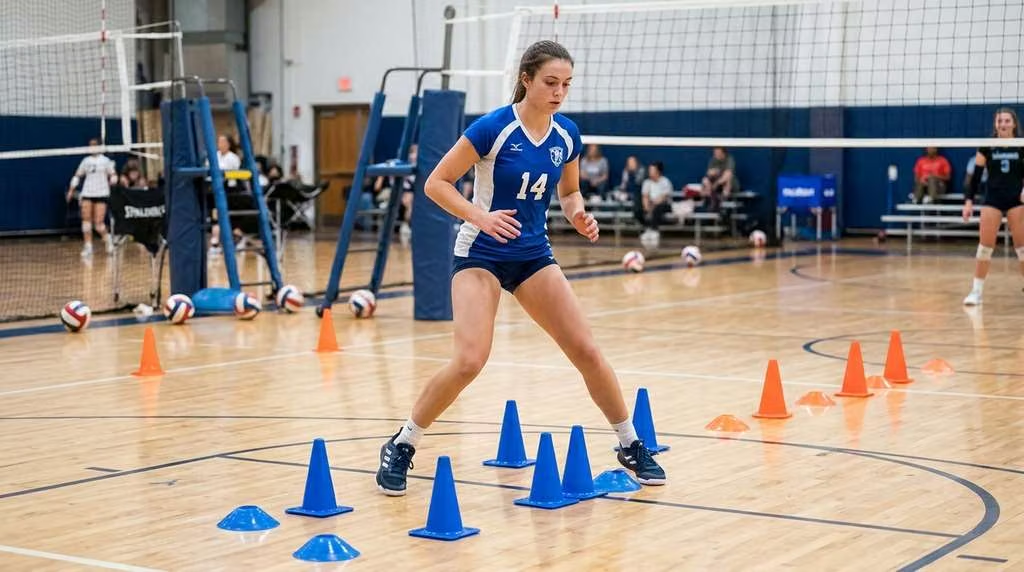
Useful footwork exercises include:
- Side-to-side shuffle steps
- Forward and backward movement
- Crossover steps
- Short acceleration drills
- Hitting approach patterns
- Agility ladder exercises
How to practice
Start in your ready position and move toward a cone placed a few steps away. Shuffle or use the appropriate movement pattern, regain balance, and return to the starting point.
Repeat in both directions while maintaining control. Keep your movements low and balanced rather than taking unnecessarily large steps.
An agility ladder can be a useful training aid, but it is optional. You can practice many volleyball footwork patterns with cones or simple floor markers.
8. Train Your Reaction Time and Defensive Skills
Defense requires you to read the opponent, react quickly, and move into a useful position before the ball reaches the floor.
Start each defensive drill in a balanced ready position with your knees bent, weight distributed comfortably, and attention focused on the hitter or ball.
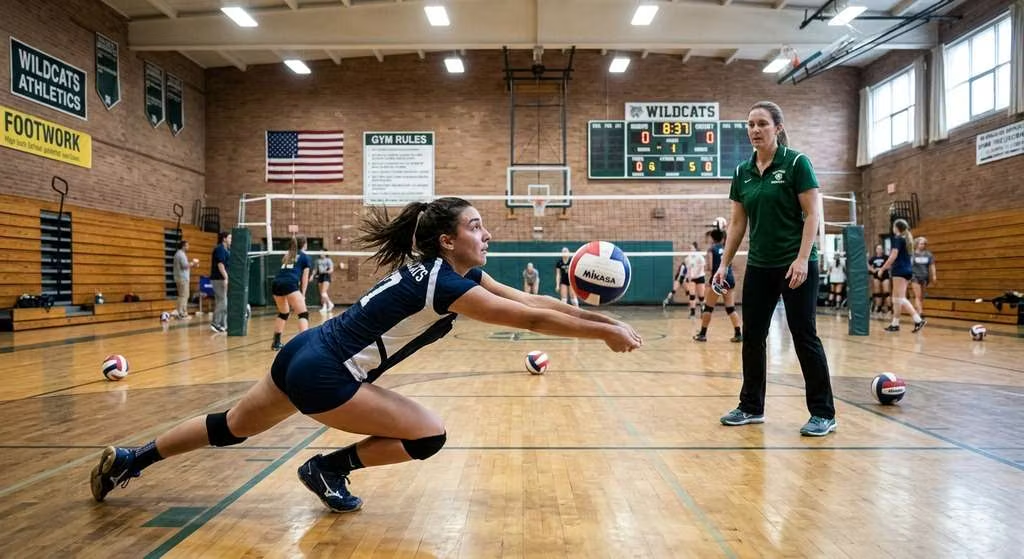
Try these exercises:
- Partner reaction drill: Have a partner send balls to different locations.
- Short-ball defense: Practice moving forward to control gently placed balls.
- Lateral movement drill: Shuffle between two markers before responding to a ball.
- Controlled digging drill: Work with a coach or partner who sends manageable attacks.
Focus on reading the play instead of guessing where the ball will go.
When learning diving or rolling techniques, practice on an appropriate surface with coaching. Do not attempt advanced defensive movements on a hard floor without instruction.
9. Improve Your Blocking Technique
Blocking helps stop or slow an opponent’s attack at the net. Effective blocking depends on timing, positioning, hand placement, and coordination with teammates.
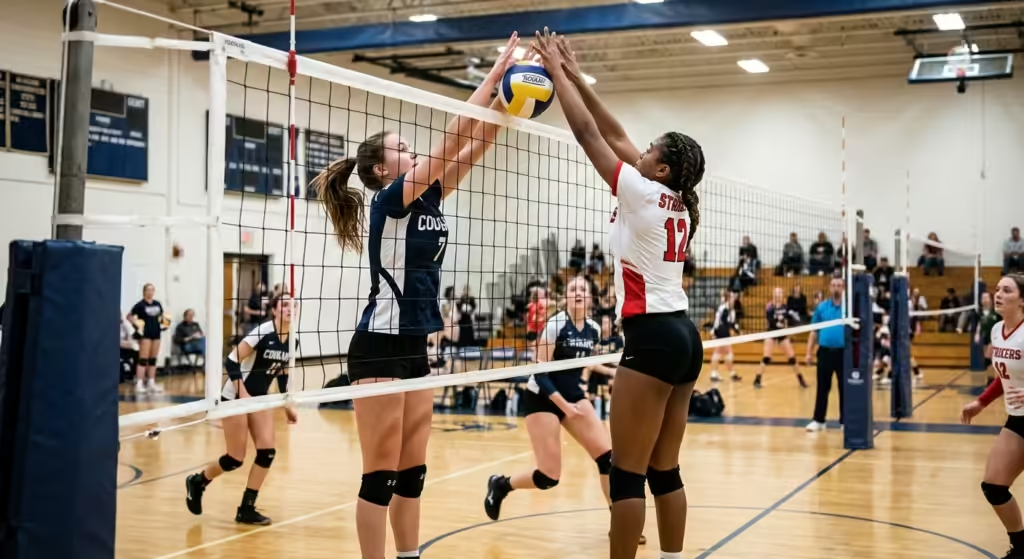
Use these training tips:
- Begin with a balanced stance near the net.
- Watch the setter and hitter to read the developing play.
- Practice moving laterally along the net.
- Jump vertically with control when timing a block.
- Reach upward and slightly forward over the net without touching it illegally.
- Land with balanced knees and enough space to avoid other players.
Beginner blocking drill
Place two markers along the net. Practice moving from one marker to the other, stopping in a balanced position, and rehearsing the blocking movement without a ball.
Once you become comfortable with the footwork, work with a coach to practice timing against a controlled set and attack.
10. Build Volleyball-Specific Strength and Conditioning
Volleyball requires repeated movements such as jumping, accelerating, changing direction, and maintaining body control. General strength and conditioning can help support these demands.
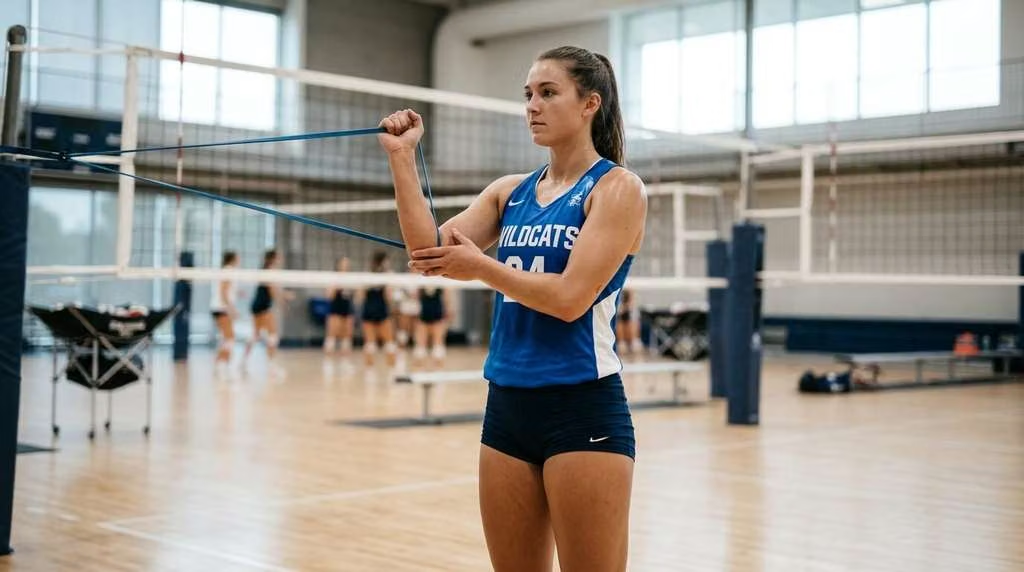
Useful exercises for many healthy beginners include:
- Bodyweight squats
- Reverse lunges
- Glute bridges
- Calf raises
- Planks
- Side planks
- Controlled push-ups
- Low-impact movement and conditioning drills
Start with exercises you can perform with proper form. Increase difficulty gradually instead of adding heavy resistance too quickly.
For jumping and landing, practice controlled movements before progressing to more demanding plyometric exercises. Allow recovery between hard sessions, and seek qualified guidance if you are new to strength training or have an injury.
You can also read our guide to strength training for volleyball players for additional exercise ideas.
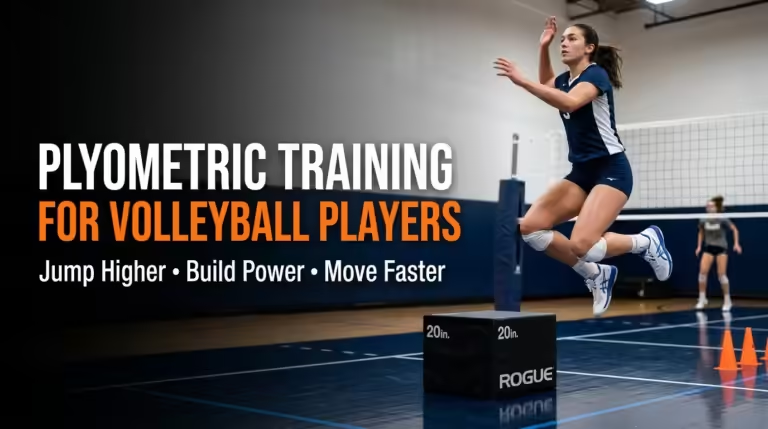
11. Improve Your Jumping Ability Safely
Jumping is important for attacking and blocking, but developing a higher jump requires more than repeatedly jumping as high as possible.
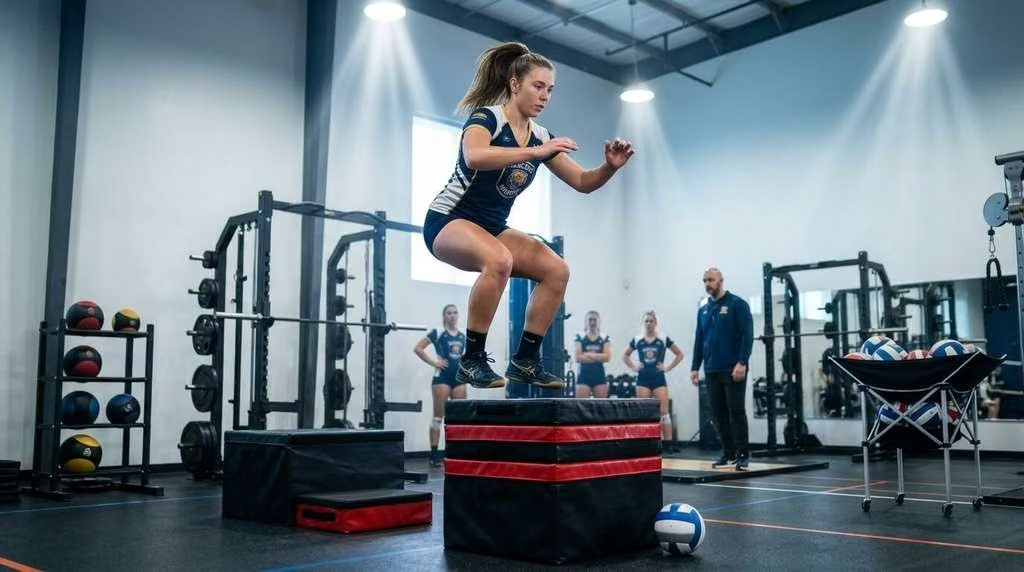
Build your foundation with:
- Leg strength exercises
- Single-leg balance work
- Controlled squat movements
- Landing technique practice
- Gradual jump training
- Adequate rest between demanding sessions
When landing, aim for a balanced position with your knees and hips bending naturally to absorb force. Avoid allowing your knees to collapse inward.
As your strength and movement control improve, you may gradually introduce more advanced jumping exercises. Beginners should keep jump volume manageable and avoid performing intense plyometrics every day.
For more guidance, explore our article on plyometric training for volleyball players.
12. Practice Communication During Every Drill
Volleyball is a team sport, and effective communication can help prevent confusion and missed opportunities.
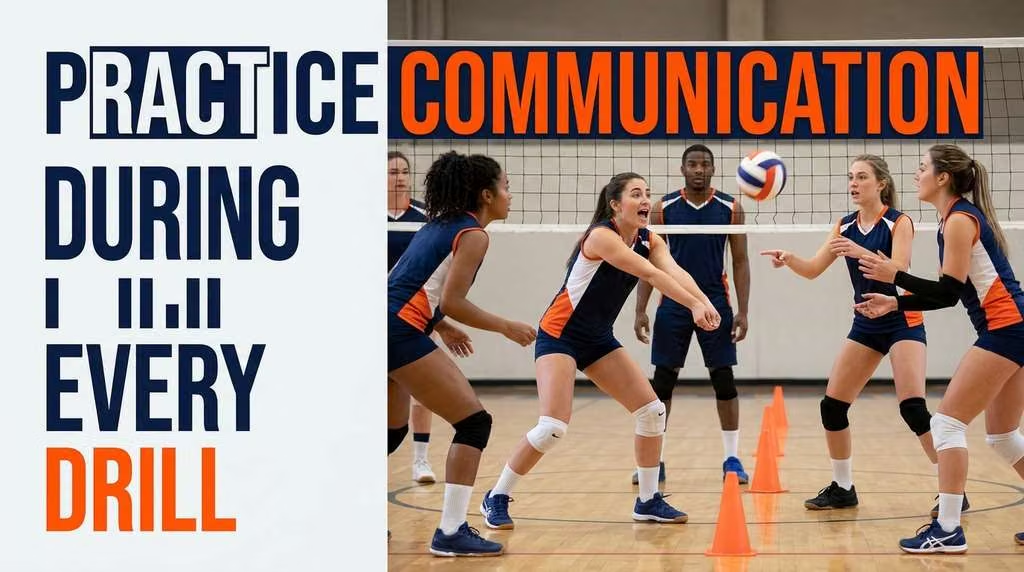
Players should communicate before, during, and after each play.
Useful calls include:
- “Mine!” to claim a ball you intend to play.
- “Help!” when you need a teammate to cover an area.
- “Out!” when you judge a ball is going outside the boundary.
- “Free ball!” when the opponent sends an easy ball over rather than attacking.
Use clear, early calls rather than waiting until the ball is directly overhead. Teammates should also communicate about serve-receive responsibilities, defensive positioning, and coverage.
Include communication goals in partner passing, serve-receive, and team defensive drills. Good habits developed during practice are easier to use during competitive matches.
13. Use Video to Identify Areas for Improvement
Watching a recording of your own practice can help you notice technique problems that are difficult to recognize while playing.
If you have permission to record your session, focus on one skill at a time.
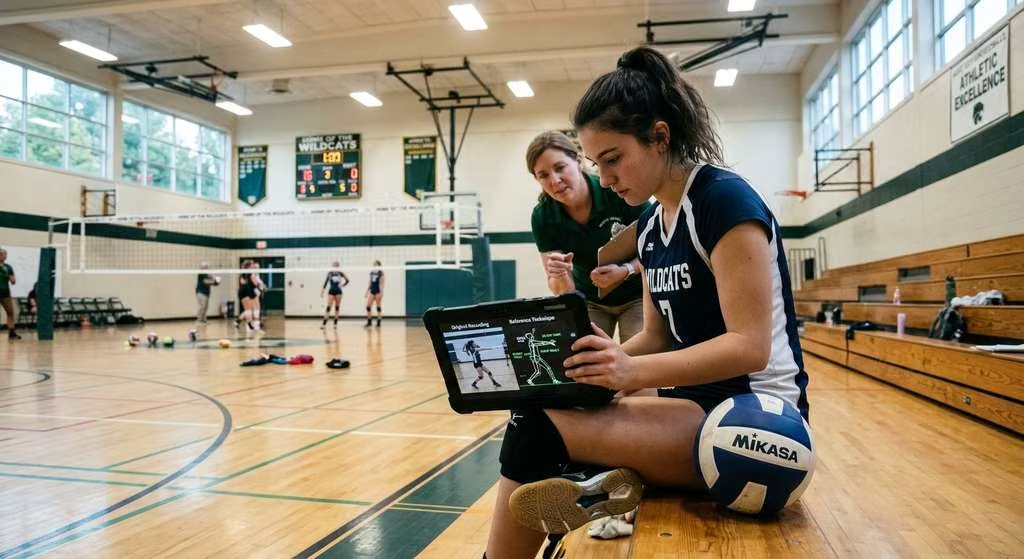
For example, when reviewing a serve, check:
- Your starting position
- Your ball toss
- Your contact point
- Your body balance
- The direction of the serve
When reviewing a hitting approach, examine your footwork, timing, arm swing, and landing.
Compare your movements with reliable coaching demonstrations rather than expecting every player’s technique to look identical. Body proportions, playing roles, and coaching methods can vary.
Choose one correction to work on during your next session. Trying to fix every movement at once can make practice confusing.
14. Track Your Progress With Simple Goals
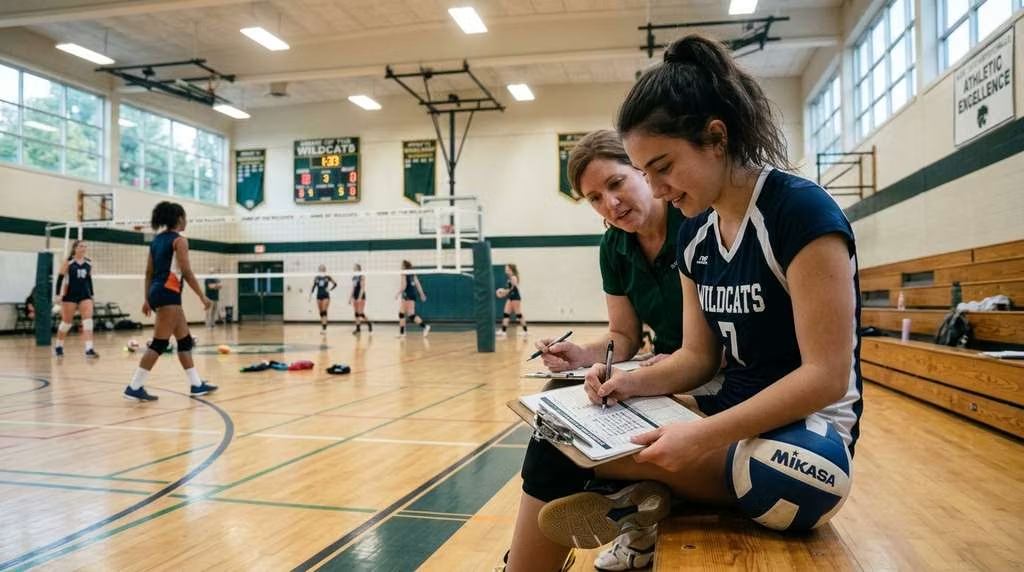
Setting measurable goals helps you understand whether your practice is improving your performance.
Instead of saying, “I want to become a better server,” create a specific goal such as, “I want to improve the percentage of serves that land in my selected target area.”
You can track:
| Skill | What to Measure |
|---|---|
| Serving | Serves landing in the court or target area |
| Passing | Passes reaching the intended setting zone |
| Setting | Sets reaching a consistent target |
| Defense | Controlled digs during a drill |
| Footwork | Ability to reach and balance at the target |
| Communication | Early, clear calls during team drills |
Record your results under similar conditions so you can compare sessions fairly. Do not judge progress from a single practice; look for patterns over time.
Set realistic goals and adjust them as your skills improve.
15. Recover Properly Between Training Sessions
Training improves your skills, but recovery helps your body adapt to the demands of practice.
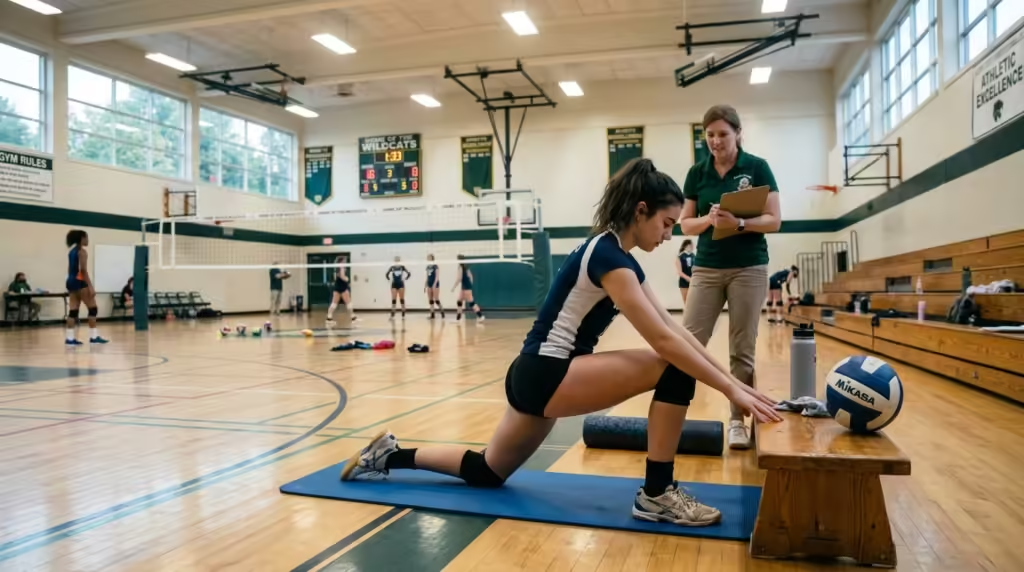
To support your training:
- Get enough sleep for your age and activity level.
- Drink water regularly, especially during hot conditions and long practices.
- Eat balanced meals with enough energy to support activity.
- Include a gradual warm-up before demanding exercises.
- Take rest or lighter training days when needed.
- Reduce training intensity if you experience unusual pain or excessive fatigue.
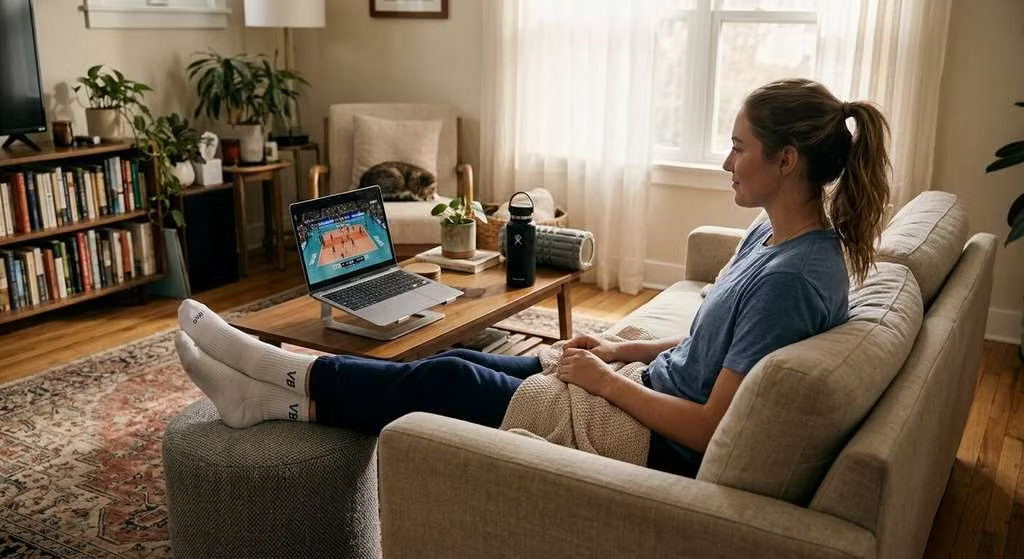
Muscle soreness can happen after unfamiliar exercise, but sharp or persistent pain should not be ignored. Stop the activity that causes pain and seek appropriate medical guidance if symptoms continue or are severe.
Consistency does not mean training hard every day. It means practicing regularly while allowing enough time to recover.
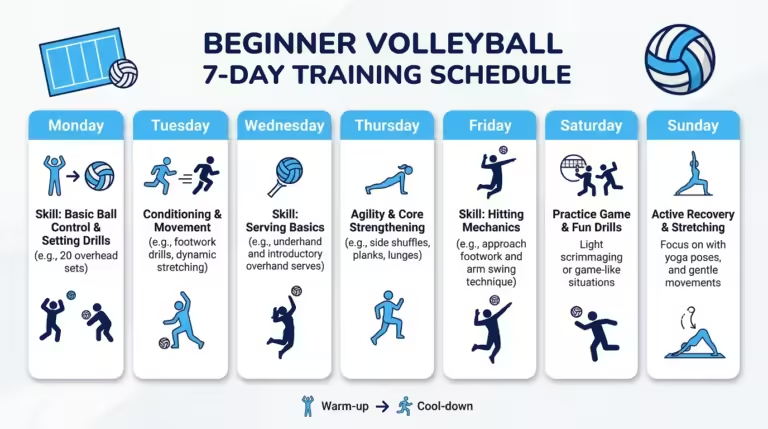
A Simple Weekly Volleyball Training Plan
If you are unsure where to begin, use this sample schedule as a starting point. Adjust the duration and intensity to your experience, school or club schedule, and fitness level.
| Day | Main Focus | Example Activities |
|---|---|---|
| Monday | Passing | Wall passing, partner passing, movement |
| Tuesday | Serving | Serving technique and target practice |
| Wednesday | Setting | Wall sets, partner setting, footwork |
| Thursday | Strength and recovery | Basic strength, mobility, light movement |
| Friday | Defense and hitting | Reaction drills, approach footwork, controlled attacks |
| Saturday | Team practice | Serve-receive, communication, game situations |
| Sunday | Recovery | Rest or comfortable light activity |
You do not have to follow this exact schedule. If your team already trains on several days, coordinate additional workouts with your coach to avoid excessive training volume.
For a more structured routine, read our guide to a weekly training program for beginner volleyball players.
Common Volleyball Training Mistakes to Avoid
Even motivated players can develop habits that slow their progress. Watch out for these common mistakes.
1. Focusing on power before technique
Hitting and serving harder will not always improve accuracy. Learn the correct movement first, then gradually increase power.
2. Practicing without a specific goal
Choose a clear objective for each drill, such as improving passing accuracy or moving into position sooner.
3. Ignoring weaker skills
It is natural to practice your favorite skill, but balanced development requires attention to passing, serving, setting, defense, and movement.
4. Skipping warm-ups
Prepare your body with progressive movement before intense jumping, sprinting, or hitting.
5. Comparing your progress with everyone else
Players learn at different rates. Compare your current performance with your own previous results.
6. Neglecting communication
Even technically skilled players can make mistakes when teammates do not understand who will play the ball.
7. Training through pain
More repetitions are not always better. Stop painful activities and address potential injuries rather than trying to push through them.
Frequently Asked Questions About Volleyball Training Tips
How can beginners get better at volleyball?
Beginners can improve by practicing fundamental skills consistently, learning correct technique, participating in team drills, and tracking progress. Start with passing, serving, setting, footwork, and communication before moving on to advanced skills.
How many days a week should I practice volleyball?
The ideal schedule depends on your age, experience, team commitments, fitness, and recovery. Beginners can start with a few focused practice sessions each week and adjust as they become more comfortable. Include rest and lighter days, especially when training involves frequent jumping.
What is the most important volleyball skill to learn first?
Passing, serving, and ready-position footwork are useful starting points for most beginners. Passing helps you control the ball, serving allows you to start a rally, and footwork helps you reach the ball in a balanced position.
Can I practice volleyball alone?
Yes. You can practice serving, wall passing, setting against a wall, footwork patterns, approach steps, and selected strength exercises alone. Team practice is still important for learning communication, rotations, serve-receive, and game situations.
What equipment do I need for volleyball training?
A volleyball and a safe practice area are enough to begin many basic drills. Cones, an agility ladder, a rebounder net, and a portable net can add variety, but they are optional. Choose equipment suited to your available space and training goals.
How long does it take to improve at volleyball?
Progress depends on your starting ability, training quality, coaching, consistency, and physical development. Some players notice improvements in individual skills relatively quickly, while more advanced techniques and match awareness usually require sustained practice.
Focus on steady progress instead of expecting a specific result by a certain date.
Final Thoughts
The best volleyball training tips are the ones you can apply consistently and correctly. Build your fundamentals, practice with a clear purpose, improve your movement, communicate with teammates, and allow enough time for recovery.
You do not need to master every skill at once. Choose one or two areas to improve, track your progress, and gradually increase the challenge as your confidence grows.
Whether you are preparing for high school tryouts, joining a recreational league, or learning volleyball for the first time, a structured approach can help you become a more capable and confident player.
Start with one drill today, practice it with focus, and build from there.
Ready to improve your game? Explore more beginner-friendly volleyball drills, training plans, and skill guides at BeginnerVolleyball.com.