
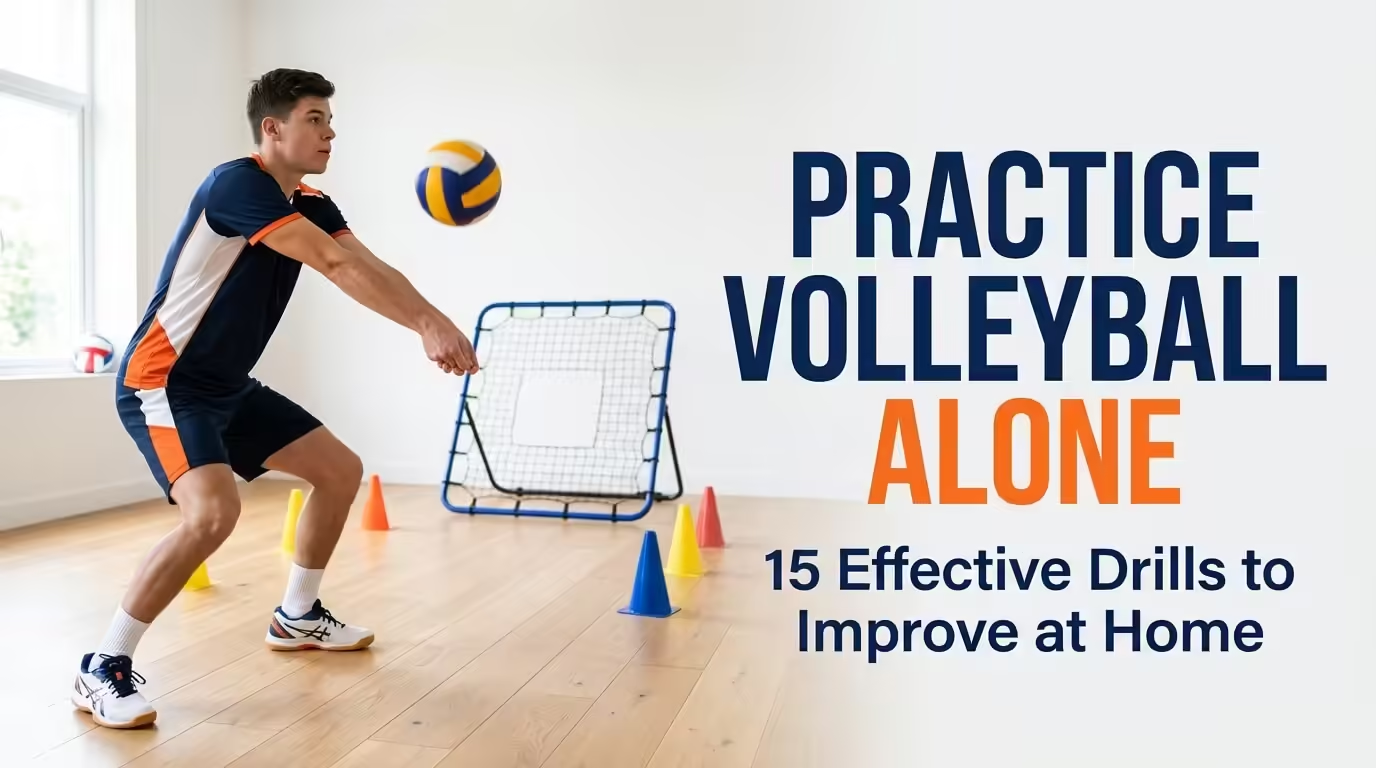
Learn how to practice volleyball alone at home with 15 effective drills to improve passing, setting, serving, footwork, ball control, and agility.
You don’t need a volleyball team or access to a volleyball court to improve your skills. With the right exercises, you can practice volleyball alone at home and develop better ball control, coordination, footwork, strength, and overall technique.
Whether you’re a beginner learning the fundamentals or an experienced player preparing for your next match, regular solo practice can help you build confidence and improve your performance.
In this guide, you’ll discover 15 effective volleyball drills you can practice alone at home, along with practical tips for creating a simple training routine.
Can You Practice Volleyball Alone at Home?
Yes! You can practice many important volleyball skills by yourself, including passing, setting, serving, footwork, reaction time, and conditioning.
A volleyball, a wall, and a small open space are enough to get started. Some drills require additional equipment, such as cones, resistance bands, or a volleyball rebounder, but these are optional.
The key is to practice consistently, focus on proper technique, and gradually increase the difficulty of your workouts.
Equipment You Need for Solo Volleyball Practice
Before starting your volleyball training at home, prepare a few basic items.
- Volleyball: Choose a regulation Size 5 volleyball or a softer indoor training ball that suits your space.
- Wall: A sturdy wall provides a useful target for passing and setting drills.
- Open space: Clear the area of furniture, fragile objects, and slippery obstacles.
- Cones or markers: Use these to practice movement, positioning, and agility.
- Knee pads: These can provide cushioning during floor-level defensive drills.
- Optional training equipment: A volleyball rebounder, net, or resistance bands can add variety to your workouts.
Always check that your practice area has enough clearance and that the wall or floor is suitable for repeated ball contact.
How to Practice Volleyball Alone at Home: 15 Effective Drills
1. Wall Passing Drill
Skill: Forearm passing and ball control
Wall passing is one of the best volleyball drills for beginners because it helps you develop consistent contact and control.
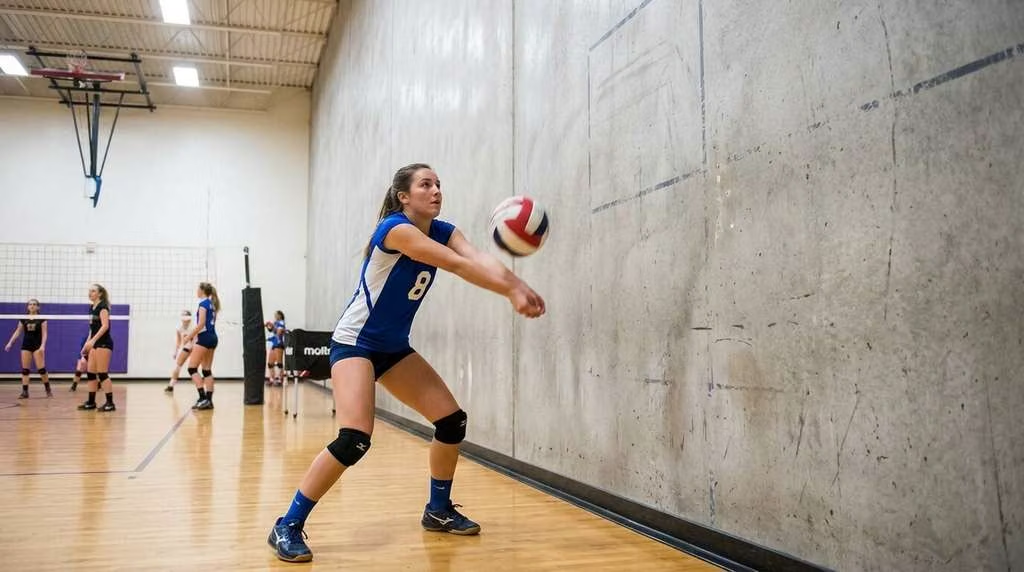
How to do it:
- Stand approximately 1.5–2 meters away from a sturdy wall.
- Hold your hands together and create a flat platform with your forearms.
- Bend your knees and keep your feet shoulder-width apart.
- Pass the ball against the wall using your forearms.
- Move into position and repeat the pass as the ball returns.
Training goal: Complete 3 sets of 20 controlled passes.
Tip: Focus on using your legs to control the ball rather than swinging your arms excessively.
2. Setting Against a Wall
Skill: Finger control and setting technique
Setting is essential for creating attacking opportunities. Practicing against a wall helps you improve hand positioning, coordination, and consistency.
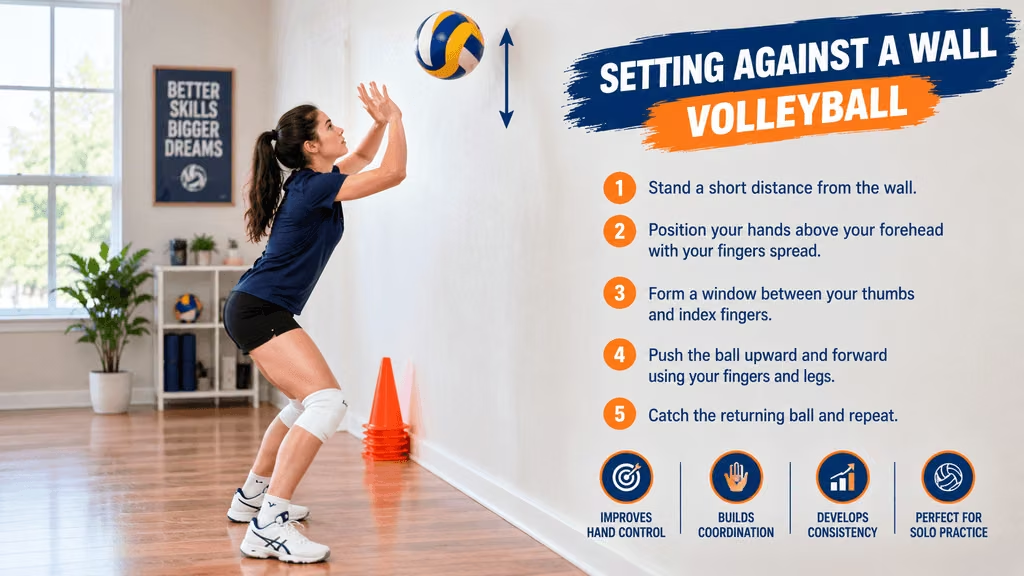
How to do it:
- Stand a short distance from the wall.
- Position your hands above your forehead with your fingers comfortably spread.
- Form a window between your thumbs and index fingers.
- Push the ball upward and forward using your fingers and legs.
- Set the returning ball again without letting it drop.
Training goal: Complete 3 sets of 15–20 controlled sets.
Tip: Avoid catching or carrying the ball. Practice clean contact with relaxed fingers and controlled movement.
3. Self-Setting Drill
Skill: Ball control and hand coordination
This simple drill is ideal when you don’t have a wall or much space available.
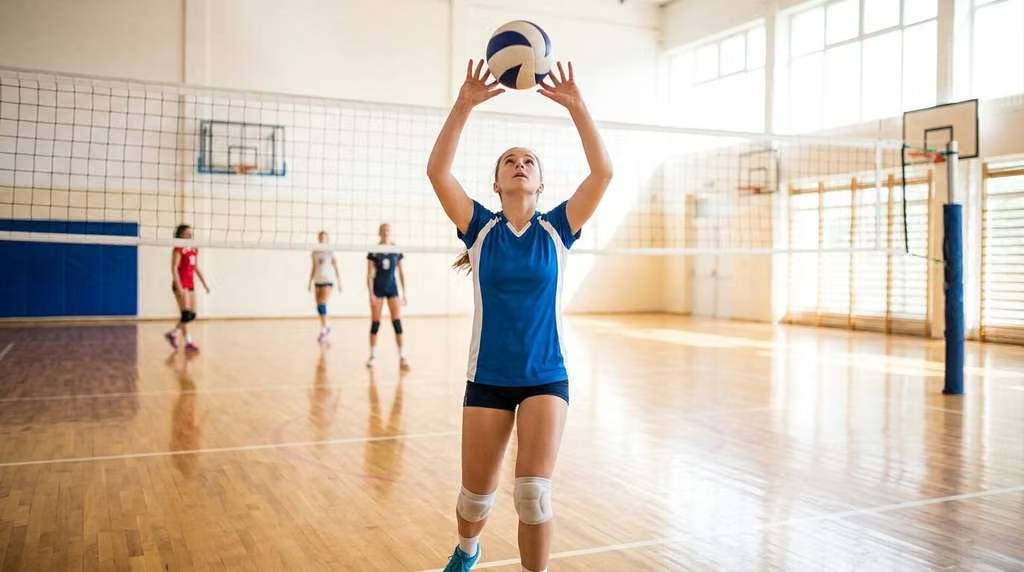
How to do it:
- Stand in a balanced volleyball ready position.
- Toss the ball slightly above your head.
- Set it straight upward using both hands.
- Keep the ball above your forehead and your body balanced.
- Repeat while maintaining control.
Training goal: Complete 3 rounds of 30 consecutive self-sets.
Tip: Start with low, controlled sets before attempting higher ones.
4. Forearm Passing to Yourself
Skill: Passing accuracy and coordination
This drill helps you practice maintaining a consistent forearm platform without depending on a partner.
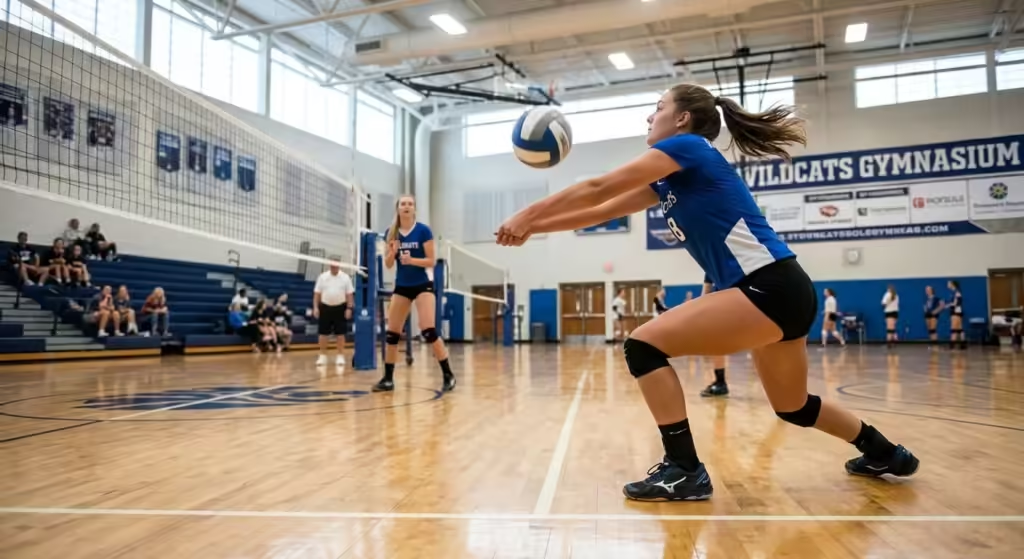
How to do it:
- Toss the volleyball a short distance above you.
- Position your feet beneath the ball.
- Join your hands and straighten your elbows.
- Pass the ball upward using your forearms.
- Adjust your position before making the next contact.
Training goal: Complete 3 sets of 15–20 passes.
Tip: Try to keep the ball at a consistent height and avoid excessive arm swinging.
5. Volleyball Footwork and Agility Drill
Skill: Movement, balance, and court positioning
Good footwork helps you reach the ball quickly and prepare for accurate contact.
How to do it:
- Place two or three cones or markers a few steps apart.
- Begin in a volleyball ready position.
- Shuffle sideways toward one marker.
- Return to the starting position and move toward the next marker.
- Practice moving forward and backward while staying balanced.
Training goal: Complete 4 rounds of 20–30 seconds.
Tip: Keep your knees bent and avoid crossing your feet during lateral shuffles.
6. Approach Footwork for Spiking
Skill: Attacking rhythm and jumping coordination
You can practice the footwork used in a volleyball spike even without a net or ball.
How to do it:
- Start a few steps away from an imaginary hitting point.
- Practice your approach steps, commonly three or four depending on your technique.
- Finish with a controlled two-foot takeoff.
- Swing your arms naturally to coordinate the jump.
- Land softly on both feet with your knees slightly bent.
Training goal: Complete 3 sets of 5–8 approaches.
Tip: Focus on rhythm, balance, and safe landings instead of jumping as high as possible every time.
7. Shadow Spiking Drill
Skill: Arm swing and hitting mechanics
Shadow spiking allows you to rehearse attacking technique without needing a ball.
How to do it:
- Begin in your normal approach position.
- Perform your approach steps.
- Swing both arms to coordinate your takeoff.
- Jump only if you have enough clear space.
- Bring your hitting arm back and simulate striking an imaginary ball.
- Land under control and reset.
Training goal: Complete 3 sets of 8 repetitions.
Tip: Keep your movement smooth and avoid twisting your body excessively during the swing.
8. Serving Toss Practice
Skill: Ball toss consistency
A consistent toss makes serving easier to control. You can improve this skill even if you cannot hit the ball over a net.
How to do it:
- Stand in your usual serving stance.
- Hold the ball in your non-hitting hand.
- Toss the ball slightly above your hitting shoulder.
- Keep the toss controlled and in front of your body.
- Catch the ball without swinging at it.
Training goal: Complete 3 sets of 10–15 tosses.
Tip: Aim for a repeatable toss height and position rather than throwing the ball excessively high.
9. Serving Practice in a Safe Open Area
Skill: Serving accuracy and technique
If you have enough space, you can practice serving toward a safe target or across a backyard volleyball net.
How to do it:
- Mark a serving position behind an imaginary or actual end line.
- Practice your serving stance and ball toss.
- Strike the ball with a controlled overhand or underhand serve.
- Aim toward a chosen target area.
- Reset and repeat, focusing on accuracy.
Training goal: Complete 2–3 sets of 8–10 serves.
Tip: Avoid serving near windows, vehicles, people, or fragile objects. If space is limited, practice your toss and serving motion instead.
10. Digging and Defensive Position Drill
Skill: Defensive posture and reaction movement
Digging requires quick reactions and a low, balanced position. You can rehearse the movement patterns alone.
How to do it:
- Begin in a low volleyball ready position.
- Move one or two steps to the right.
- Lower your hips and extend your arms into a passing platform.
- Return to the center.
- Repeat on the left side.
Training goal: Complete 3 sets of 8 movements in each direction.
Tip: Practice controlled movement first. Avoid diving onto hard floors or surfaces that could cause injury.
11. Ball Control and Reaction Drill
Skill: Coordination and reaction time
This exercise helps you develop a better feel for the ball and respond quickly to changing positions.
How to do it:
- Toss the ball a short distance upward.
- Clap once before catching it.
- Repeat with two claps if you can maintain control.
- Change the toss direction slightly.
- Progress to controlled self-passes or self-sets.
Training goal: Complete 3 rounds of 10–15 repetitions.
Tip: Keep the ball low enough to control safely, especially when practicing indoors.
12. Target Passing Drill
Skill: Passing direction and accuracy
Passing toward a target teaches you to direct the ball rather than simply keeping it in the air.
How to do it:
- Mark a safe target on a wall using removable tape, or choose a visible target area.
- Stand at a comfortable distance.
- Pass the ball toward the target using your forearms.
- Adjust your stance and platform angle after each attempt.
- Track how many passes reach the target area.
Training goal: Complete 3 sets of 10 attempts.
Tip: Use a soft ball or a suitable practice wall to reduce the risk of damage.
13. Core Strength Training
Skill: Stability, balance, and body control
A strong core helps you maintain balance while passing, jumping, and changing direction.
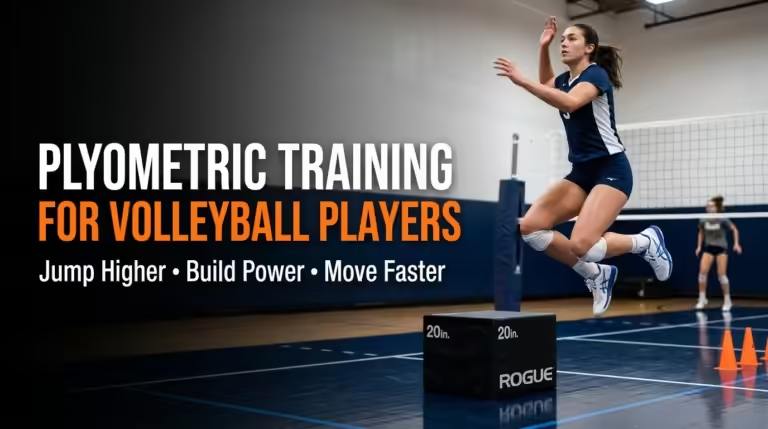
To develop explosive power for jumping, blocking, and spiking, combine your regular volleyball strength training exercises with plyometric drills designed to improve speed and jumping ability.
Try these bodyweight exercises:
- Plank: 3 sets of 20–40 seconds.
- Side plank: 2 sets of 15–30 seconds per side.
- Glute bridges: 3 sets of 12 repetitions.
- Bird dogs: 2 sets of 10 repetitions per side.
Tip: Use controlled movements and maintain good technique. Beginners should start with shorter holds and fewer repetitions.
14. Jump Training for Volleyball
Skill: Lower-body power and jumping technique
Improving your vertical jump requires more than jumping practice alone. Incorporating strength exercises for volleyball players can help develop the lower-body strength needed for effective takeoffs and controlled landings.
How to do it:
- Warm up with light movement and dynamic stretches.
- Perform controlled squat-to-stands or bodyweight squats.
- Practice small, controlled vertical jumps.
- Land softly with your knees aligned over your feet.
- Rest between sets to maintain good technique.
Training goal: Complete 2–3 sets of 5–8 controlled jumps, adjusting the volume to your fitness level.
Tip: Beginners should prioritize landing mechanics and strength before adding intense plyometric exercises. Stop if you experience pain. Read NSCA plyometric guidance
15. Watch, Learn, and Review Your Technique
Skill: Volleyball knowledge and self-correction
Physical practice is important, but understanding proper technique can make your training more effective.
How to do it:
- Watch a reliable volleyball coaching video.
- Choose one skill, such as serving, passing, or setting.
- Focus on one technical detail at a time.
- Record a short video of yourself practicing, if possible.
- Compare your movement with the coaching demonstration.
- Repeat the drill while correcting one specific mistake.
Training goal: Spend 10–15 minutes studying and reviewing one skill.
Tip: Avoid trying to correct everything at once. Small, consistent improvements are easier to maintain.
A Simple 30-Minute Volleyball Workout at Home
You can combine several of these drills into a short, manageable workout.
| Time | Activity |
|---|---|
| 5 minutes | Warm-up and dynamic movement |
| 5 minutes | Wall passing |
| 5 minutes | Setting or self-setting |
| 5 minutes | Footwork and defensive movement |
| 5 minutes | Serving toss or target practice |
| 5 minutes | Core exercises and cool-down |
Adjust the routine to your available space, equipment, and fitness level. If you are new to exercise, begin with shorter sessions and gradually increase your training time.
Tips to Improve Faster When Practicing Alone
Practicing volleyball alone can be effective when you approach each session with a clear goal.
Focus on Technique First
Correct technique matters more than performing many repetitions. Learn the fundamentals of passing, setting, serving, and footwork before increasing the intensity.
Practice Consistently
Short, regular sessions can help you develop better coordination and muscle memory. Aim for three to five manageable sessions per week, with recovery time as needed.
Track Your Progress
Record your passing accuracy, consecutive sets, successful target hits, and serving consistency. Reviewing your results can help you identify areas that need more attention.
Use Video Feedback
Record yourself performing a drill and review your body position, footwork, and contact technique. Compare your movements with trusted coaching resources.
Make Safety a Priority
Choose a clear practice area with suitable flooring and enough space to move. Warm up before jumping or performing intense movements, and stop if you feel pain or unusual discomfort.
Common Mistakes to Avoid During Solo Volleyball Practice
Even simple drills can become less effective if you develop poor habits.
- Swinging your arms too much: Use your legs and body positioning to help control forearm passes.
- Using incorrect hand positioning: Practice the proper setting technique and avoid catching or carrying the ball.
- Ignoring footwork: Move into position before contacting the ball.
- Training without a goal: Choose a specific skill to improve during each session.
- Doing too much too soon: Increase repetitions and jumping intensity gradually.
- Practicing in an unsafe space: Remove obstacles and avoid hitting a hard ball near fragile objects.
Frequently Asked Questions
Can I learn volleyball by practicing alone?
Yes. You can develop many fundamental skills, including ball control, passing, setting, serving technique, footwork, and conditioning. Playing with teammates is still important for learning communication, teamwork, blocking, and game situations.
How long should I practice volleyball at home each day?
Beginners can start with 15–30 minutes per session, depending on their fitness and available space. Focus on quality repetitions and take breaks when needed.
How can I practice volleyball without a net?
Use wall passing, setting against a wall, self-setting, serving toss practice, shadow spiking, and footwork drills. These exercises allow you to work on technique without a full court.
What is the best volleyball drill for beginners at home?
Wall passing is an excellent starting point because it develops forearm control and coordination. Self-setting and serving toss practice are also useful for beginners.
Can I improve my volleyball jump at home?
Yes. Bodyweight strength exercises, controlled jumping drills, and proper landing practice can help develop the foundation for jumping ability. Increase the intensity gradually and prioritize safe technique.
What equipment is best for solo volleyball training?
A volleyball and a suitable wall are enough for many beginner drills. Cones, knee pads, resistance bands, and a rebounder can provide additional training options.
Conclusion
Learning how to practice volleyball alone at home is a practical way to improve your skills without needing a full team or court. By practicing wall passing, setting, serving tosses, footwork, defensive movement, and strength exercises, you can build a solid foundation for future matches.
Start with a few simple drills, practice consistently, and focus on improving your technique one step at a time. As your skills develop, combine solo training with team practice to learn how to apply those skills during real games.
Remember: Consistency, proper technique, and safe training habits are the foundations of volleyball improvement.


One Comment