
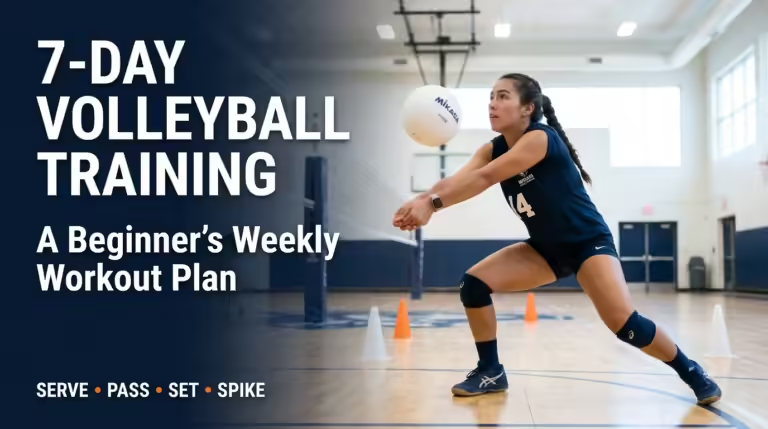
Coaching beginners? These simple volleyball practice plans for beginners include fun drills, a 60-minute schedule, and an easy 4-week progression.
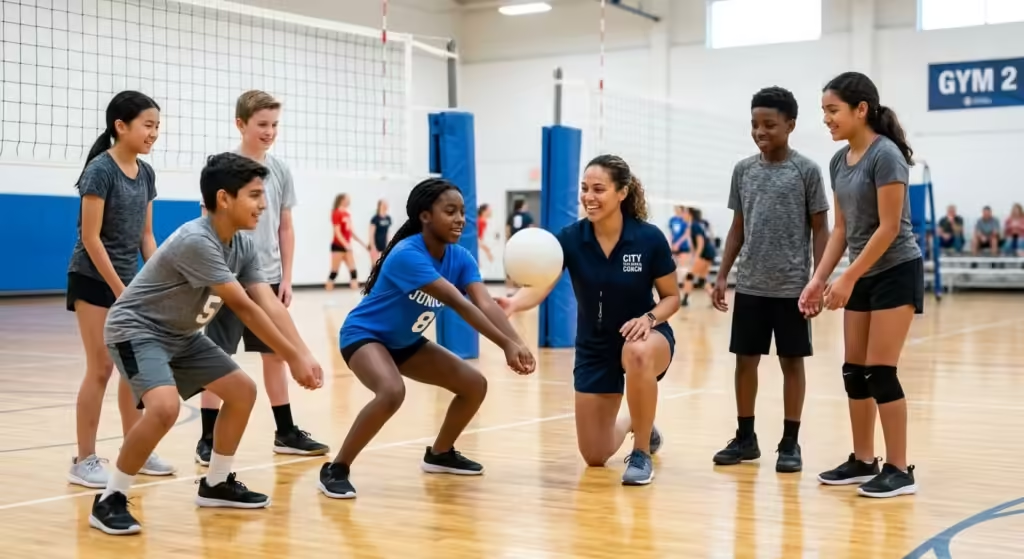
Coaching beginners can feel intimidating. You want to teach the game, keep everyone safe, and make sure players have fun. The good news is that the goal is simple: help beginners love volleyball while learning the basics. Well-structured volleyball practice plans for beginners make this easier by focusing on passing, serving, and fun activities that keep everyone moving. This guide includes a 60-minute practice schedule, a simple 4-week progression, and three beginner-friendly drills you can use right away.
The Problem: Too Many Lines, Too Little Learning
One of the most common mistakes new coaches make is running complex drills that leave players standing in long lines. Beginners do not learn by watching. They learn by touching the ball, moving their feet, and making small mistakes in a safe space.
Complex drills also create confusion. If you need five minutes to explain a drill, it is too complicated for first-year players. Before your first session, take time to review [Basic Volleyball Rules] with your team so everyone starts on the same page.
The Solution: High-Rep, Low-Queue Practice Plans
The best beginner practices are high-rep and low-queue. That means every player gets many touches on the ball and very little standing around. Instead of running a long scrimmage, use small-sided games, partner drills, and simple activities that keep the ball moving.
Beginners also feel safer when practice follows a predictable rhythm. Use the “sandwich” method: start with a warm-up, put skill work in the middle, and finish with a fun game. This simple structure works for every practice in your 4-week volleyball plan.
These volleyball practice plans for beginners emphasize frequent ball contacts, simple instructions, and active drills that help new players build confidence.
The 4 Pillars of Effective Volleyball Practice Plans for Beginners
Every good practice plan rests on four simple pillars. Keep these in mind as you build your sessions.
1. Fundamentals First
Passing and serving matter most for beginners. Spiking is exciting, but it requires timing and coordination that most new players do not have yet. Build early practices around footwork, passing, and serving. Once players can keep the ball in play, add setting and hitting progressions.
2. Keep It Moving
Minimize lines and maximize touches. Use partner work, small groups, and extra balls whenever possible. If you only have a few balls, set up stations so every player is always doing something active.
3. Fun Over Competition
Beginners need games that feel playful, not pressure-filled. Use “Catch and Toss” instead of a formal scrimmage. Use target serving instead of a serving test. When players laugh and move, they learn faster and come back for the next practice. You Can Learn 10 Easy Volleyball Serving Drills for Beginners
4. Use the “Sandwich” Method
A good beginner practice has a simple shape:
- Warm-up first
- Skill work in the middle
- Fun game at the end
This gives players energy at the start, focus in the middle, and a positive finish.
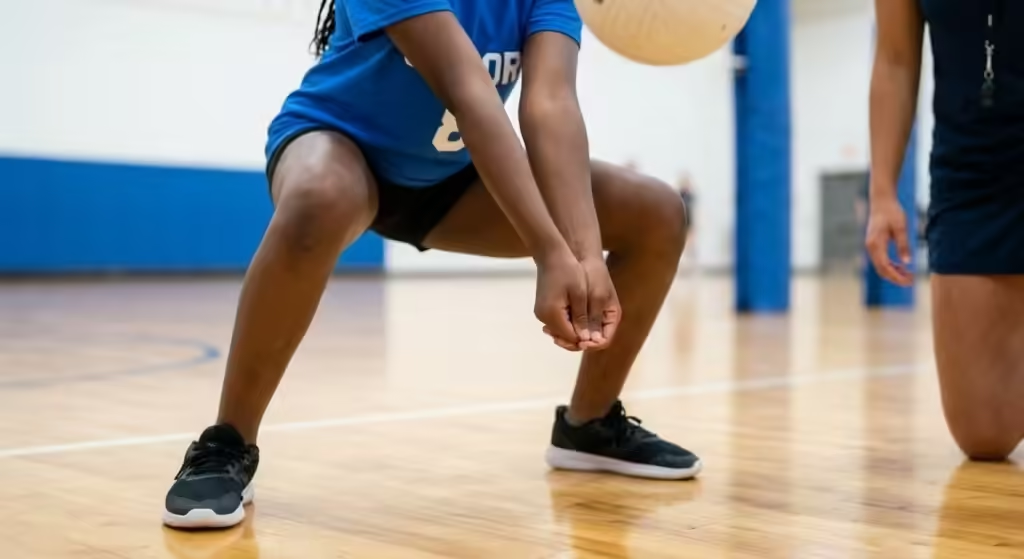
Anatomy of a 60-Minute Beginner Practice
Use these volleyball practice plans for beginners to organize a productive 60-minute session that works well for new coaches, school teams, and parent volunteers.
- 0–10 Minutes: Dynamic Warm-Up. Use jogging, high knees, butt kicks, arm circles, and light lateral movement. Do not skip this. The goal is to raise body temperature and prepare shoulders and legs for movement.
- 10–25 Minutes: Skill Focus — Passing. Keep it simple. Teach footwork first, then the platform. Have players move their feet to the ball before they swing their arms. Correct one thing at a time.
- 25–40 Minutes: Drill Application — Serving or Setting. Choose one skill for the day. For underhand serving, focus on toss consistency and contact. For setting, focus on hand position and soft contact.
- 40–55 Minutes: Game Play. Use a 4v4 or 6v6 “Coach Toss” scrimmage. The coach tosses the ball in to start each rally. This keeps the game moving and removes the pressure of a difficult serve.
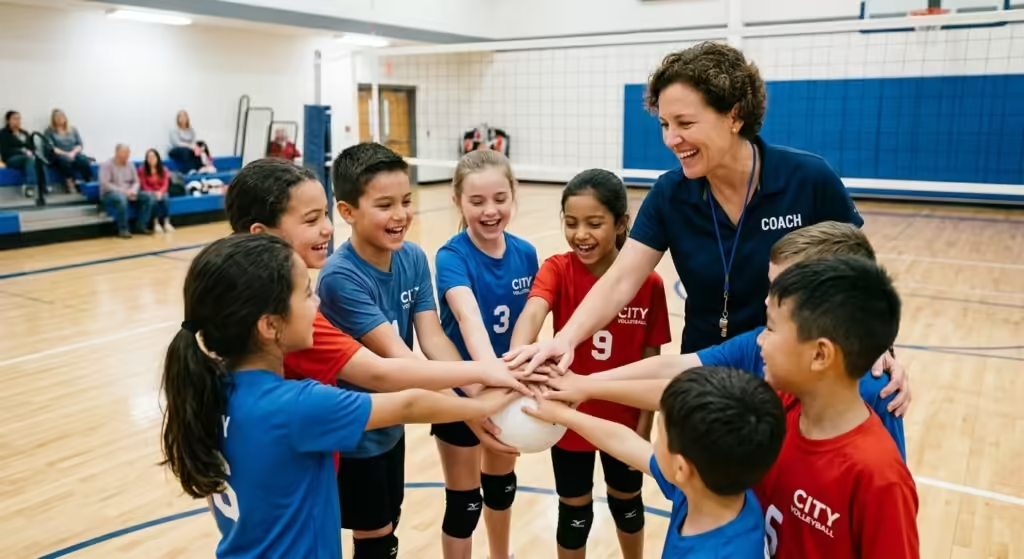
- 55–60 Minutes: Cool Down and Team Huddle. Finish with light stretching and a positive team huddle. Name one thing the team did well. End on encouragement, especially with beginners.
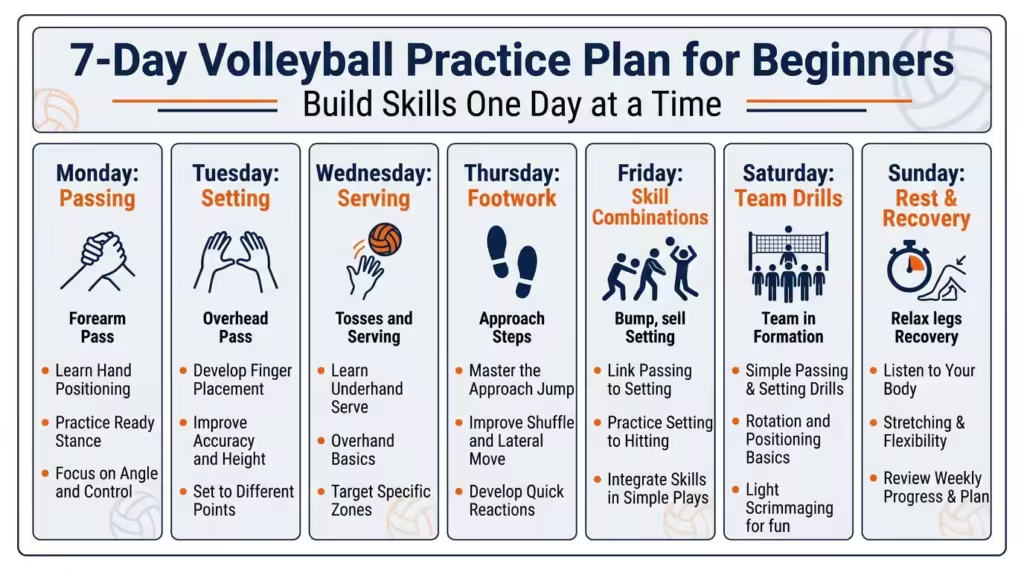
Sample 4-Week Progression
These volleyball practice plans for beginners follow a simple 4-week progression that develops essential skills gradually. Adjust each week’s activities according to your players’ experience and progress.
- Week 1: The Basics. Focus: Footwork and passing. Goal: Keep the ball in the air with a partner for 5–10 contacts.
- Week 2: Serving. Focus: Underhand serving. Goal: Get the serve over the net from a shorter distance.
- Week 3: Setting. Focus: Hand position and “catching” the ball softly. Goal: Set the ball to a partner with control.
- Week 4: Putting It Together. Focus: Serve, pass, set sequence. Goal: Complete three touches per side during modified game play.
3 Fun Drills for Beginners
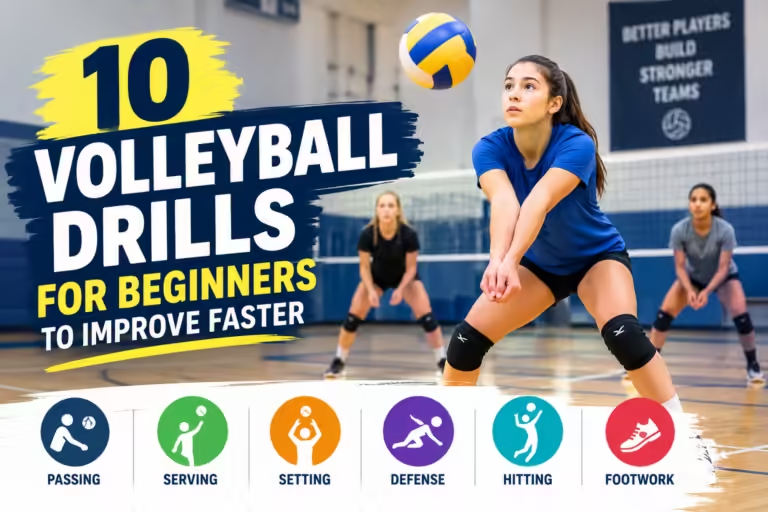
These beginner volleyball drills are simple, active, and easy to explain. Use them during the skill or game sections of your practice.
1. “Toss and Catch” (Passing)
Have partners stand 10–15 feet apart. One player tosses the ball, and the other catches it in the correct passing platform position. This teaches body position without the fear of a bad pass. Progress to passing the ball back.
2. “Target Serving”
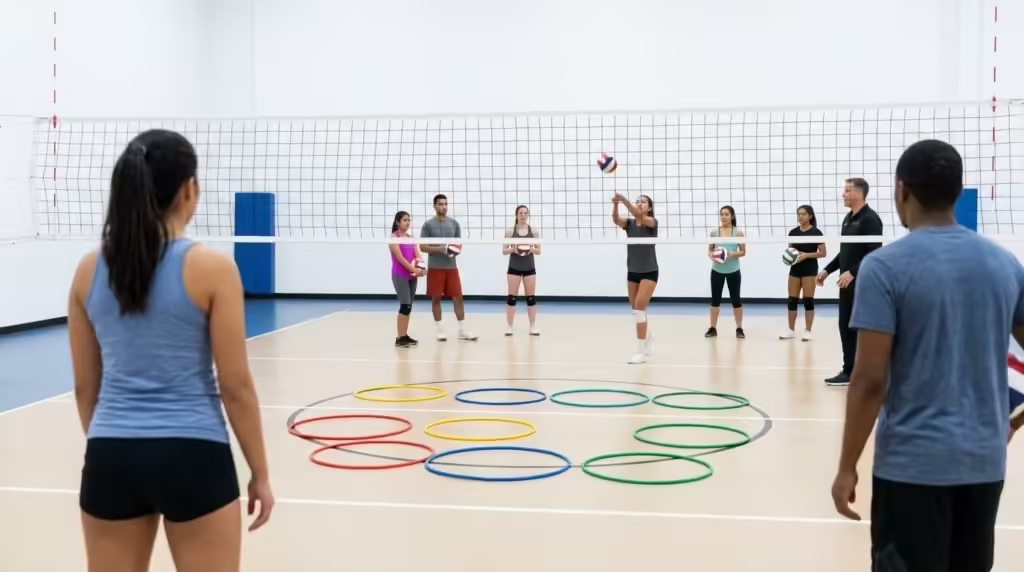
Place hula hoops on the other side of the net. Players serve underhand and try to land the ball in or near a hoop. Give points for targets. This builds aim and confidence while keeping serving fun.
3. “Queens of the Court”
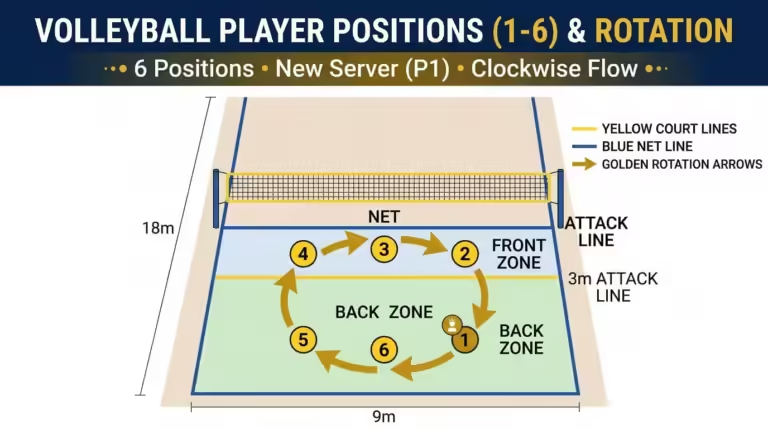
Set up a small-sided game where players practice serving and receiving. Rotate players quickly so no one sits out long. Keep score simple and celebrate effort, not just winning.
Final Thoughts: Be Patient and Keep It Simple
Effective volleyball practice plans for beginners focus on frequent ball contacts, clear instruction, and enjoyable activities rather than perfect performance.
Before your first session, make sure players have the right gear. Read our guide on [How to Choose Your First Volleyball] to help parents and beginners prepare.
Ready to run your first practice with confidence? Download our printable 4-week practice plan PDF, or comment below with your biggest coaching challenge. We would love to help you build a practice your players look forward to.



Love the sandwich idea — warm-up, skill work, then a fun game to finish. Keeping beginners moving instead of standing in lines makes such a difference!